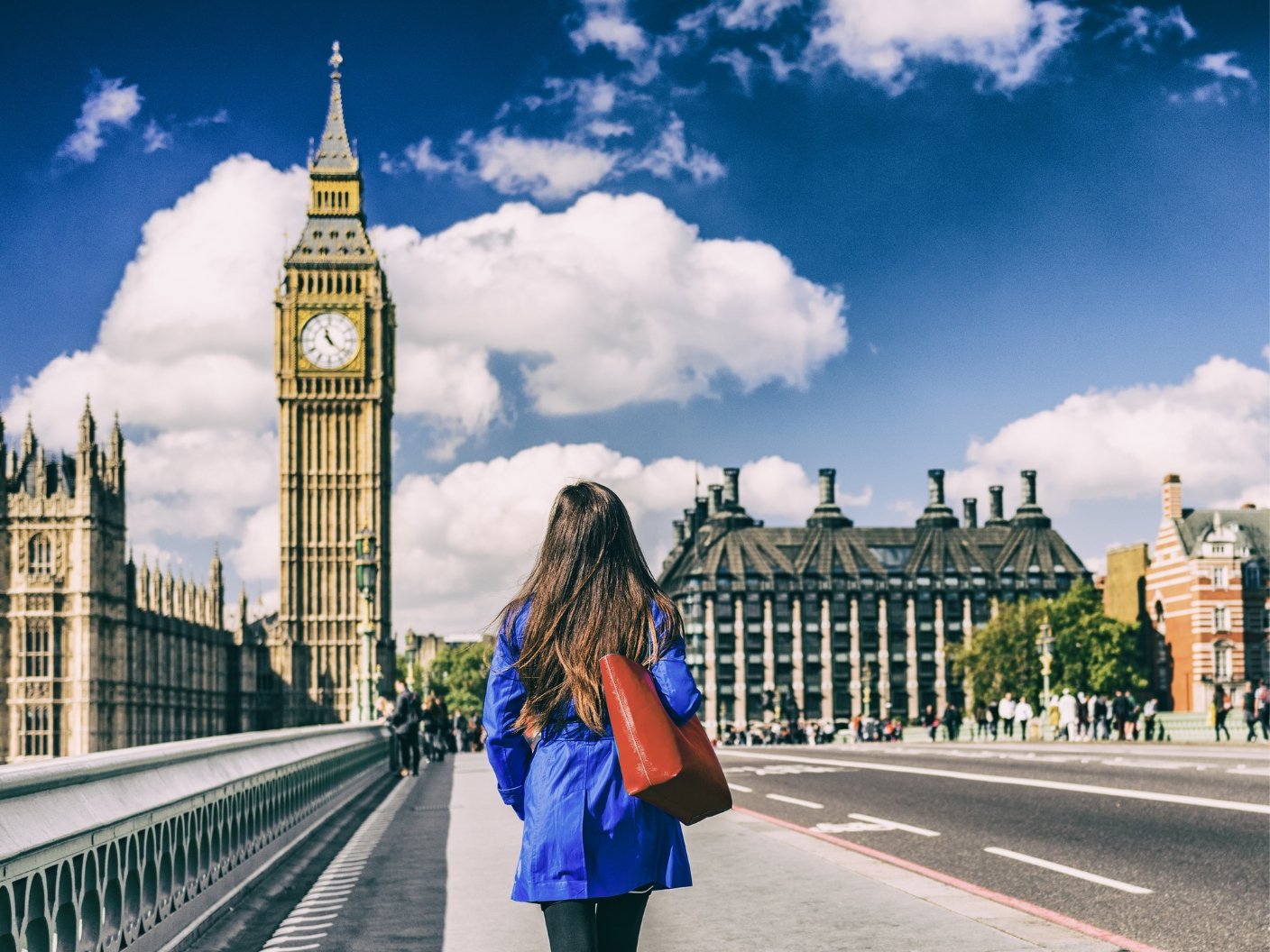
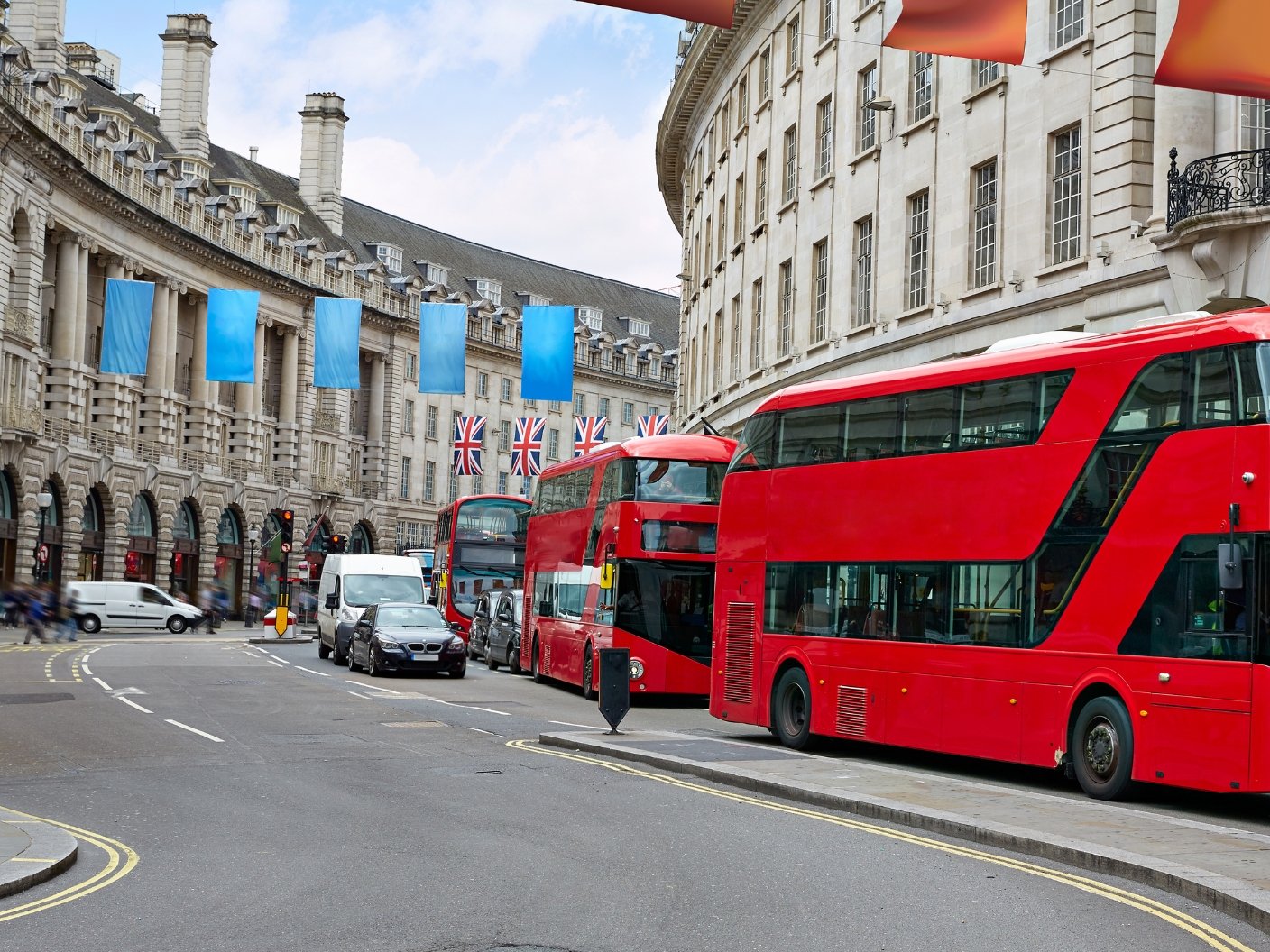
🇬🇧 United Kingdom · Source: gov.uk · Updated July 2026
Study in the United Kingdom — Complete Guide for Indian Students
Everything an Indian passport holder needs to know to study a Bachelor's or Master's in the UK —
student visa, fees, IELTS, top universities, cost of living, and the Graduate visa stay-back option.
Free guidance from QEAC certified advisors in Kochi, Kerala and Sharjah, UAE.
⚡ eVisa — BRP replaced from Jan 2025✓ Zero Consultancy Fees1-Year Master's DegreesWork 20 hrs / weekGraduate Visa — 2 Yrs StayQEAC #10439
The UK is home to some of the world's oldest and most respected universities. For Indian students, the UK offers a unique combination of shorter course durations, a strong post-study work pathway, and a large, welcoming Indian student community. Seven in ten international UK graduates say they are promoted faster and earn more because of their UK education.
🎓
1-Year Masters
Earn a UK postgraduate degree in just 12 months — faster and more affordable than 2-year programmes in other countries.
💼
Graduate Visa
Stay and work in the UK for 2 years after graduation (3 years for PhD). No job offer needed to apply.
🏛️
World #1 Unis
Oxford, Cambridge, Imperial, UCL — consistently ranked in the top 10 globally. British degrees are recognised worldwide.
🆓
G2H: FREE
Guide to Heights handles your entire UK application — university shortlisting to visa — completely free. Learn more →
📋
eVisa from January 2025: Physical Biometric Residence Permits (BRPs) are no longer issued. All students now receive a digital eVisa linked to a UKVI account. Create your UKVI account early. See official guidance at gov.uk/evisa ↗
London Life
Student Life
Iconic UK
UK Visa Types — Source: gov.uk/student-visa
Which UK Student Visa Do You Need?
Most Indian students planning a Bachelor's or Master's degree apply for the Student Visa (General). Here are the three main student visa routes available from India.
🎓
Student Visa (General)
Most Common for Indian Students
Age 16 or over with an unconditional university offer
Requires CAS from a licensed UK sponsor university
Work up to 20 hrs/week during term, full-time in holidays
Eligible for the Graduate visa after degree completion
Fee: £558 (≈ ₹71,100) from outside UK (from 8 April 2026)
📚
Short-Term Study Visa
English Language Courses
For English language programmes of 6 to 11 months
Must be at an accredited institution
No work rights permitted under this visa
No Graduate visa pathway available
Fee: approximately ₹23,016
👦
Child Student Visa
Ages 4 to 17
For students aged 4–17 with a place at a UK independent school
To be eligible for a UK Student Visa as an Indian passport holder, you must meet all of the following conditions:
✅ You Must Have...
✓
Unconditional university offer from a licensed UK student sponsor
✓
CAS reference number — Confirmation of Acceptance for Studies issued by your university
✓
Sufficient funds — £1,529/month (London) or £1,171/month (outside London) for up to 9 months, held for 28 consecutive days
✓
English language proof — IELTS, PTE, TOEFL or equivalent
✓
Valid Indian passport with at least 6 months validity
✓
TB screening certificate from a UKVI-approved clinic in India (mandatory)
✓
Be 16 or over at time of application
📋 What Is a CAS?
CAS stands for Confirmation of Acceptance for Studies. It is a unique reference number your UK university gives you after making you an offer. You must enter this number in your visa application. You must apply for your visa within 6 months of receiving your CAS.
⏰ When to Apply
→Apply up to 6 months before your course starts (from outside UK)
→Arrive up to 1 month before course starts (if course >6 months)
Documents You Need for a UK Student Visa from India
All documents not in English must be accompanied by a certified translation (dated, signed, with translator's name and confirmation of accuracy). Always verify with the official UKVI document list ↗ before lodging.
🪪
1. Identity & Travel
✓
Current passport or valid travel document
Must be valid. Passport must be taken to VAC on biometric appointment day.
✓Passport-sized colour photographs
✓Any previous passports (for travel history)
📄
2. CAS & Course Offer
✓
CAS reference number from your university
Issued after you accept an unconditional offer. Apply within 6 months of receiving it.
✓University unconditional offer letter
✓Academic transcripts and degree certificates
💰
3. Financial Evidence
✓
Bank statements showing 28 consecutive days of funds
London: £1,529/month × 9 = £13,761. Outside London: £1,171/month × 9 = £10,539. Plus full first-year tuition fee.
✓
Education loan sanction letter (if applicable)
Must clearly state loan amount, purpose, and disbursement details.
✓Scholarship or sponsorship letter (if applicable)
Step-by-Step Process — Source: gov.uk/student-visa/apply
How to Apply for a UK Student Visa from India
You must apply online via the official UK government website. All applications must be submitted before you travel to the UK. Guide to Heights walks you through every step — completely free.
1
Apply to Your Chosen UK University & Get an Unconditional Offer
Apply to your UK university through UCAS or the university's own portal. Once you receive and accept an unconditional offer, your university will issue your CAS (Confirmation of Acceptance for Studies) reference number. You need this CAS before you can apply for the visa. Guide to Heights helps you identify the right university and course — WhatsApp us for a free recommendation ↗.
2
Prepare Your Documents
Collect your CAS reference, valid passport, 28-day bank statements (showing £1,529/month for London or £1,171/month for outside London plus tuition fees), IELTS/PTE score, TB screening certificate, and any other required documents. All non-English documents must be certified translations. Use our free document checklist above.
3
Apply Online — Up to 6 Months Before Your Course Starts
Apply at gov.uk/student-visa/apply ↗. Fill in your personal details, CAS number, and financial information carefully. Pay the visa fee (£558 from 8 April 2026) and Immigration Health Surcharge (£776 per year of stay) online. You can save your form and return to complete it later.
4
Book & Attend Biometric Appointment at VFS Global
Book an appointment at your nearest VFS Global UK Visa Application Centre in India (available in major cities including Delhi, Mumbai, Chennai, Kolkata, Hyderabad, Bengaluru, Ahmedabad, Chandigarh, Jalandhar, and Kochi). Bring your original passport and documents. Your fingerprints and a digital photo will be taken.
5
Wait for a Decision — Usually 3 Weeks
You'll receive a decision within approximately 3 working weeks if applying from India. Priority processing is available for an additional fee if you need a faster decision. You will be notified by email. Do not book non-refundable flights until your visa is granted.
6
Receive Your eVisa & Create UKVI Account
From January 2025, all approved students receive a digital eVisa — there is no physical BRP card. Your grant letter will explain how to create or access your UKVI account ↗. This eVisa is your proof of immigration status in the UK. Keep the grant letter safely.
7
Travel to the UK & Start Your Course
You can enter the UK up to 1 month before your course starts (if your course lasts more than 6 months), or 1 week before (if 6 months or less). Do not travel before the start date shown on your visa. Register with a GP (doctor), open a student bank account, and set up your National Insurance number. Our free Pre-Departure Session covers UK-specific settling-in tips.
How Much Money Do You Need for a UK Student Visa from India?
The UKVI requires you to hold funds covering your tuition fees and living costs. The money must be in your bank account for at least 28 consecutive days, and the end of that 28-day period must be within 31 days of your application date. A single-day balance is not sufficient.
💷 Financial Requirement — Official UKVI Figures
Living costs — London
£1,529/month × 9
= £13,761 total (≈ ₹15.6L)
Living costs — Outside London
£1,171/month × 9
= £10,539 total (≈ ₹11.9L)
First-year tuition fees
As per CAS
UG: £11,400–£38,000 · PG: £9,000–£30,000
Visa application fee
£558
≈ ₹71,100 (one-time, from 8 Apr 2026)
Immigration Health Surcharge (NHS)
£776/year
≈ ₹88,000/year
Typical total (1-year Master's, outside London)
£24,000–£42,000
≈ ₹27L – ₹48L
⚠️
India NOT in differential evidence list: Unlike students from UAE, Australia, or the USA, Indian passport holders must always prove their finances. Your bank statements must clearly show the funds held for 28 consecutive days. Source: gov.uk/student-visa/money ↗
💡
12 months exemption: If you have been in the UK with a valid visa for at least 12 months before applying, you do not need to prove financial maintenance. Source: gov.uk ↗
English Requirements — Source: gov.uk/student-visa/knowledge-of-english
English Language Requirements for UK Student Visa
Indian passport holders must prove English language ability. You cannot prove English simply through your Class 12 English marks for the visa — but some universities accept this for admission. For the visa itself, you need an approved test unless you have a UK degree or qualification taught in English.
Course Level
Required CEFR Level
Typical IELTS Score
Typical PTE Score
Typical TOEFL iBT
Degree level or above (UG/PG/PhD)
B2
6.0 overall
51+
72+
Below degree (Foundation/Diploma)
B1
5.0 – 5.5
42+
52+
English language course (B2 or above)
B2
6.0 overall
51+
72+
📌
Indian students note: You must pass a Secure English Language Test (SELT) from an approved provider. IELTS Academic is the most widely accepted. Some universities with Higher Education Provider (HEP) status can assess English themselves and may accept different tests — always confirm with your university. Source: gov.uk/student-visa/knowledge-of-english ↗
✅ Ways to Prove English for Indian Students
✓Pass IELTS Academic, PTE, or TOEFL iBT (most common for Indian students)
✓Degree taught in English at a non-UK institution + Ecctis assessment code
✓UK degree-level qualification awarded by a UK institution
✓Proved English in a previous UK visa application (specific conditions apply)
🎓 Save on IELTS / PTE
Guide to Heights offers discounted PTE and IELTS vouchers for students planning to study in the UK or Australia. Available for students in Kerala and GCC countries.
From Russell Group world-leaders to career-focused universities with May intakes, the UK has options for every student profile and budget. Guide to Heights has direct partnerships with multiple UK institutions — this means faster application processing and zero admission fees.
IT, Business, Nursing · £14,000–£16,500/yr · May intake available
May Intake
University of Sunderland
Nursing Top-Up · Healthcare · May intake · £14,000–£16,000/yr
May Intake
University of Bedfordshire
Business, IT, Health Sciences · May intake · from £13,500/yr
May Intake
Kingston University London
Business, Design, Nursing, Technology · from £16,000/yr
Popular UK Courses for Indian Students
What Can You Study in the UK?
The UK offers Bachelor's and Master's programmes in almost every subject. Here are the most popular categories for Indian students, especially from Kerala and the GCC.
Digital MediaFilm & TV ProductionFashion & DesigningHospitality & TourismUX/UI DesignGraphic DesignSports ManagementCreative WritingGreen BusinessBuilding Information Management
Student Life in UK
UK Campus
Clinical Placements
Cost of Studying in the UK — Indian Rupee Reference
How Much Does It Cost to Study in the UK for Indian Students?
Costs vary significantly by university, course, and city. London is the most expensive city — other UK cities like Manchester, Birmingham, Sheffield, and Leeds are considerably more affordable. All INR conversions are indicative at £1 ≈ ₹113.
🎓 Tuition Fees
UG Lecture-based (per year)
£10,000 – £25,000
≈ ₹11L – ₹28L
UG Medical/Clinical (per year)
£20,000 – £45,000
≈ ₹22L – ₹51L
PG Taught Master's (1 year)
£9,000 – £30,000
≈ ₹10L – ₹34L
MBA (1 year)
£15,000 – £35,000
≈ ₹17L – ₹40L
Doctoral (PhD)
£15,000 – £25,000
≈ ₹17L – ₹28L (funded PhDs available)
🏠 Living Costs (per month)
Accommodation (London)
£740 – £1,255
≈ ₹84K – ₹1.42L
Accommodation (Outside London)
£550 – £750
≈ ₹62K – ₹85K
Food & groceries
£150 – £250
≈ ₹17K – ₹28K
Transport (bus pass)
£32 – £80
30% rail discount with Railcard
Utilities & mobile
£55 – £100
≈ ₹6K – ₹11K
Total monthly (outside London)
£900 – £1,200
≈ ₹1.02L – ₹1.36L
💡
Budgeting tip: Choose a university outside London to save significantly on living costs. A 1-year Master's in Manchester or Birmingham typically costs 30–40% less than the same course in London. Part-time work (20 hrs/week during term) can earn £200–£350/week to offset living costs.
Post-Study Pathway — Source: gov.uk/graduate-visa
Graduate Visa — Stay in the UK After Your Degree
The Graduate visa is the UK's post-study work route. It allows Indian students who complete a UK degree to stay and work (or look for work) in the UK — with no job offer required. This is the most important reason why Indian students choose the UK over other destinations.
Complete your CRICOS-registered UK qualification. Choose a course with strong graduate employment outcomes. Work up to 20 hrs/week during term and full-time in holidays to build UK work experience and savings while studying.
2
Graduate Visa
Apply for the Graduate Visa After Graduation
After successfully completing your UK degree, apply for the Graduate visa ↗. If you apply on or before 31 December 2026: you get 2 years (or 3 years for PhD graduates). From 1 January 2027: the duration changes to 18 months for UG/PG graduates. No job offer is needed to apply. Fee: £937 + IHS (from 8 April 2026). Source: gov.uk/graduate-visa
3
Work in UK
Work & Build Experience in the UK
The Graduate visa lets you work in any job, at any skill level, without restrictions. This is your opportunity to build UK work experience, grow your salary, and establish yourself professionally. Many Indian graduates use this time to transition into Skilled Worker visa roles.
4
Long-Term Stay
Switch to Skilled Worker Visa for Longer Stay
If you find a UK employer willing to sponsor you, you can switch from Graduate visa to a Skilled Worker visa — which can lead to Indefinite Leave to Remain (ILR) and eventually British citizenship. Guide to Heights advises on post-study pathways during our free pre-departure sessions.
Practical Visa Tips
UK Student Visa — Do's and Don'ts for Indian Students
✅ Do These
✓Start your visa process at least 6 months before course start
✓Get your CAS from university before beginning the visa application
✓Book TB screening test at least 3 months before applying
✓Maintain bank balance for 28+ consecutive days before applying
✓Verify your university is a licensed UKVI student sponsor
✓Register with a GP (doctor) within a week of arriving
✓Open a student bank account as soon as you arrive
✓Create your UKVI account to access your eVisa
❌ Don't Do These
✗Don't overstay your visa — this leads to a ban on re-entering the UK
✗Don't work more than 20 hours per week during term time
✗Don't be self-employed on a student visa
✗Don't change your course without UKVI/university permission
✗Don't claim public funds or benefits
✗Don't skip classes — attendance is monitored by universities
✗Don't travel before the start date on your visa grant letter
✗Don't submit a single-day bank balance as financial proof
Expert Tips from QEAC Certified Counsellors
Practical Tips for Indian & GCC Students Applying to the UK
🏦
Your bank statements must show transaction history for 28 consecutive days — not a single balance certificate. Explain any large recent deposits. The funds must stay in the account for the full 28 days.
🩺
Book TB screening early. Approved clinics in India have waiting times. Results are valid for 6 months. Approved clinics are listed at gov.uk/tb-test-visa ↗.
📱
eVisa is your proof of status from 2025. Create your UKVI account immediately upon receiving your visa grant. Use your UKVI account to share your immigration status with employers, landlords, or universities.
⏰
Apply for the Graduate visa before 31 December 2026 to get 2 years of stay. Applications from 1 January 2027 receive only 18 months. Plan your graduation and application timing accordingly.
🏙️
Study outside London to significantly reduce your costs. Cities like Manchester, Birmingham, Sheffield, and Leeds offer excellent universities at 30–40% lower living costs than London.
🎓
If your degree is taught in English but NOT from a UK institution, you need an Ecctis assessment to prove English equivalency for the visa. Plan 4–6 weeks for this process.
💉
Indian nurses and healthcare students: Hepatitis B, DTP, and MMR vaccinations are required for NHS clinical placements. Get these in India before departure — significantly cheaper than in the UK.
📋
Verify your university is on the UKVI register of licensed sponsors at gov.uk ↗ before paying any admission fee or deposit.
Free Tools & Official Sources
Helpful Resources for Indian Students Applying to the UK
Official government sources and free G2H tools — everything you need to plan your UK studies.
Frequently Asked Questions — AIO & Google AI Overview Optimised
Common Questions — Studying in the UK for Indian Students
The UK Student Visa application fee is £558 (approximately ₹71,100) for applications submitted on or after 8 April 2026 — up from the previous £524 — when applying from outside the UK as an Indian passport holder. You must also pay the Immigration Health Surcharge (IHS) of £776 per year, which gives you access to the NHS. You can calculate the exact fee for your visa length at visa-fees.homeoffice.gov.uk ↗. Guide to Heights charges zero consultancy fees — the only cost you pay is the government fee. Source: gov.uk/student-visa
You must show: (1) the full first-year tuition fee as stated on your CAS, plus (2) living costs of £1,529 per month for London or £1,171 per month for courses outside London, for up to 9 months. This money must be in your bank account for at least 28 consecutive days before applying. The end of the 28-day period must be within 31 days of your application date. A single-day balance certificate is not acceptable. Source: gov.uk/student-visa/money
Yes. Most UK student visa holders can work up to 20 hours per week during term time and full-time during official university holidays (semester breaks, summer vacation). You cannot be self-employed, work as a professional sportsperson, or work as a sports coach. Family members accompanying you may also have work rights — check your specific visa conditions on the UKVI website. Source: gov.uk/student-visa/work
For degree-level and above courses (Bachelor's, Master's, PhD), you need English at CEFR Level B2, which is typically IELTS Academic 6.0 overall. For below-degree courses (Foundation, Diploma), CEFR Level B1 (around IELTS 5.0–5.5) is required. Some universities may accept 5.5 for foundation programmes. If your previous degree was taught in English but at a non-UK institution, you need an Ecctis assessment to prove equivalency. Source: gov.uk/student-visa/knowledge-of-english
The Graduate visa lets you stay and work in the UK after successfully completing a UK degree — no job offer is needed. If you apply on or before 31 December 2026: you get 2 years stay (or 3 years for PhD). If you apply on or after 1 January 2027: you get 18 months (or 3 years for PhD). This is a key advantage of studying in the UK over other destinations. The Graduate visa fee is £937 (from 8 April 2026). Source: gov.uk/graduate-visa
Yes, tuberculosis (TB) screening is mandatory for Indian passport holders applying for a UK student visa. You must visit a UKVI-approved clinic in India (not any clinic). Results are valid for 6 months from the date of the test. Book your TB test at least 3 months before your visa application to avoid delays. Find approved clinics at gov.uk/tb-test-visa ↗. Source: gov.uk/tb-test-visa
CAS stands for Confirmation of Acceptance for Studies. It is a unique reference number issued by your UK university after they make you an unconditional offer and you accept it. You must enter this CAS number in your visa application. You must apply for your visa within 6 months of receiving your CAS. Your CAS contains details about your course, fees, and university — make sure all information on your CAS matches your application exactly. Source: gov.uk/student-visa/your-course
Dependants (spouse/partner and children) are only permitted for: (1) students with full government financial sponsorship studying a course of 6+ months, or (2) students studying above degree level (PhD or research-based higher degree) at a university with a track record of compliance, where the course starts on or after 1 January 2024. Most taught Master's and undergraduate students from India cannot bring dependants to the UK. Source: gov.uk/student-visa/family-members
If you apply from outside the UK (from India), you will usually receive a decision within 3 working weeks. Priority processing is available for an extra fee if you need a faster decision. Peak periods (September–October and January–February) may take longer. It is strongly recommended to apply at least 3–4 months before your course start date. Source: gov.uk/student-visa
From January 2025, the UK no longer issues physical Biometric Residence Permits (BRPs). Instead, all approved students receive a digital eVisa linked to a UKVI account. You must create a UKVI account to access your eVisa — this is your official proof of UK immigration status. Your eVisa is used to prove your right to study, work, and access NHS services. Create your account at gov.uk/ukvi-account. Source: gov.uk/evisa
Tuition fees for international students (including Indian students) vary significantly by university and subject. Undergraduate degree fees range from £10,000 to £38,000 per year. Postgraduate (Master's) fees range from £9,000 to £30,000 per year, with most 1-year taught Master's programmes costing £14,000–£22,000. Top universities like Oxford, Cambridge, and Imperial College charge up to £45,000+ per year. Guide to Heights helps you find the right university within your budget — free advice available via WhatsApp.
Yes. Guide to Heights (QEAC #10439, British Council #49805) provides completely free guidance for students planning to study in the UK — including university shortlisting, application support, visa document checklist, SOP review, and pre-departure preparation. We have offices in Kochi (Kerala), Sharjah (UAE), and Melbourne (Australia). Contact us on WhatsApp: +91 73065 83820. The only costs you pay are the government visa fees directly to UKVI.
Student & Parent Success Stories
What Our Students Say About Studying in the UK
Real experiences from students and families across Kerala and the GCC who reached UK universities with Guide to Heights — at zero consultancy cost.
🇬🇧★★★★★Rated Excellent by UK-bound studentsKerala · UAE · Qatar · Saudi Arabia · Kuwait
★★★★★
"From choosing my university to getting my CAS and lodging the visa, Guide to Heights handled everything for free. My visa decision came in under three weeks. Abin sir personally checked my financial documents so there were no mistakes with the 28-day rule."
MSc Data Science · University of Leeds
AR
Adithya R.Kochi, Kerala
★★★★★
"We are based in Sharjah and were worried about doing everything from the UAE. The team guided us fully on Botim and got all my nursing documents ready. Today my daughter is studying in the UK. Truly a family we can trust."
BSc Nursing · University of Sunderland
ST
Sneha ThomasSharjah, UAE
★★★★★
"They helped me with my education loan guidance and got me a discounted PTE voucher too. The advice was always honest — they told me exactly which universities fit my budget instead of pushing expensive ones. Highly recommend for UK admissions."
MBA · University of Bedfordshire
MA
Muhammed AshiqKozhikode, Kerala
★★★★★
"As a parent, what I valued most was the transparency. Zero fees, clear timelines, and someone always available on WhatsApp to answer our doubts. My daughter is now settled at her London university. Thank you, Guide to Heights."
Parent · Kingston University London
RN
Rajesh NairThrissur, Kerala
★★★★★
"My SOP was completely reworked with their help and they guided me on stacking a scholarship on top of my university offer. Every step was explained in simple language. I never once felt lost during the process."
MSc Public Health · University of Birmingham
AM
Ann MariaKottayam, Kerala
★★★★★
"Being in Qatar, I thought applying to the UK would be complicated. The GCC team made it effortless — TB test guidance, document checklist, and pre-departure tips all sorted. I landed in the UK fully prepared."
MSc Business Analytics · Birmingham City University
FR
Fahad R.Doha, Qatar
Ready to write your own UK success story? Talk to a QEAC-certified counsellor — free, no obligation.
QEAC #10439 · British Council #49805 · Zero Fees · Kochi · Sharjah · Melbourne
Start Your UK Study Journey — Completely Free
Guide to Heights has helped hundreds of students from Kerala, India, and GCC countries get their UK student visa and secure places at top UK universities. Our QEAC-certified (#10439) and British Council recognised (#49805) team handles everything from university shortlisting to pre-departure preparation — at zero cost to you.